
There’s nothing quite like a beach day in Destin, Florida. Sugar-white sand, emerald-green water, and beautiful Gulf views are exactly why so many families return to the Emerald Coast year after year.
But even on the sunniest days, Gulf conditions can change quickly. Calm-looking water doesn’t always mean safe swimming conditions, and knowing what to look for before heading into the water can make a big difference.
Whether you’re planning a family vacation in Destin, staying in nearby Miramar Beach, or exploring Okaloosa Island, understanding the beach warning flags, recognizing rip currents, and following a few simple safety tips can help you enjoy your time along the coast.
Here’s what every visitor should know before their next Destin beach day.
What Do the Destin Beach Flags Mean?
Before heading into the Gulf, one of the most important things you can do is check the beach warning flags.
Destin uses a color-coded beach warning flag system to communicate current water hazards, including surf conditions, dangerous currents, and potentially hazardous marine life.
You’ll find warning flags at designated beach access points and guarded areas throughout Destin and the surrounding Emerald Coast.
And remember, even when the water looks calm, conditions can change throughout the day.
Green Flag
Low hazard: Calm conditions, but caution is still necessary.
A green flag means surf and current conditions are relatively calm.
While these are generally more favorable conditions for swimming, a green flag doesn’t mean the water is completely risk-free.
Always supervise children, pay attention to changing weather, and stay aware of your surroundings.
Yellow Flag
Medium hazard: Moderate surf and/or currents.
Yellow flags indicate that swimming conditions require additional caution.
Waves and currents may be stronger than they appear, especially for young children and inexperienced swimmers.
If you choose to enter the water, stay near a lifeguard, use appropriate safety equipment, and avoid swimming beyond your abilities.
Red Flag
High hazard: High surf and/or strong currents.
A single red flag means dangerous swimming conditions are present.
Strong waves and currents can quickly overwhelm even experienced swimmers.
The safest choice is to stay out of the Gulf until conditions improve.
Remember, a beautiful beach day doesn’t always mean it’s a safe day to swim.
Double Red Flags
Water closed to the public.
When double red flags are flying, entering the Gulf is prohibited under applicable local beach closure rules.
That includes swimming and wading.
These closures are issued because conditions are considered extremely dangerous, and visitors should follow all instructions from lifeguards and local authorities.
The good news? You can still enjoy plenty of other Emerald Coast activities without getting into the Gulf.
Purple Flag
Dangerous marine life may be present.
Purple flags warn beachgoers about potentially hazardous marine life, such as jellyfish or stingrays.
A purple flag may fly alongside another warning flag, so always pay attention to both.
If you’re unsure about conditions or marine life in the area, ask a lifeguard before entering the water.
How to Check the Destin Beach Flags Today
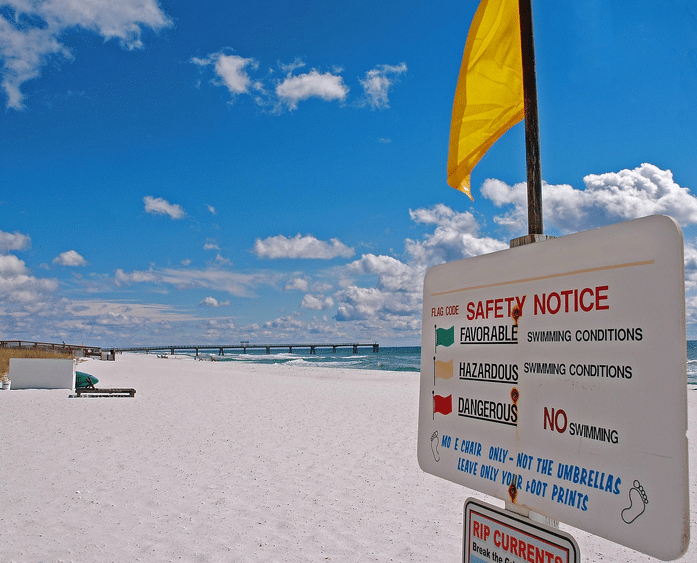
One of the best things about visiting Destin is having access to so many beautiful beaches, from lively public beach parks to quieter stretches of shoreline.
And while our guide to the best beaches for families can help you choose where to spend the day, checking the current beach flags should always be part of your morning routine.
Here’s how to find the latest water conditions before heading out.
Text BEACH to 44144 for Daily Flag Updates
Want an easy way to check Destin beach conditions from your phone?
Text BEACH to 44144 to sign up for beach warning flag updates for the Destin–Fort Walton Beach area.
This service helps visitors stay informed about current Gulf conditions during the beach safety season.
You can also check the Destin Fire Control District’s beach warning information and local beach safety announcements.
Because conditions can change throughout the day, always check the posted flags again when you arrive.
Okaloosa County Beach Safety and Lifeguard Patrols
Did you know that different beach safety teams serve Destin and Okaloosa Island?
Understanding which agency covers your beach can help you find the most relevant safety information.
Destin Beach Safety, a specialized rescue service within the Destin Fire Control District, patrols Destin-area beaches during its seasonal lifeguard operations, generally March through October.
You can learn more through the City of Destin’s rip current and beach safety information.
Okaloosa County Beach Safety serves designated beach areas on Okaloosa Island and provides lifeguard services, emergency response, and beach safety education.
For current information, visit Okaloosa County Beach Safety.
Lifeguard locations, hours, and seasonal coverage can vary. Before swimming, confirm whether a lifeguard is on duty at your specific beach access.
Whenever possible, choose a guarded swimming area and follow lifeguard instructions.
Rip Currents in Destin
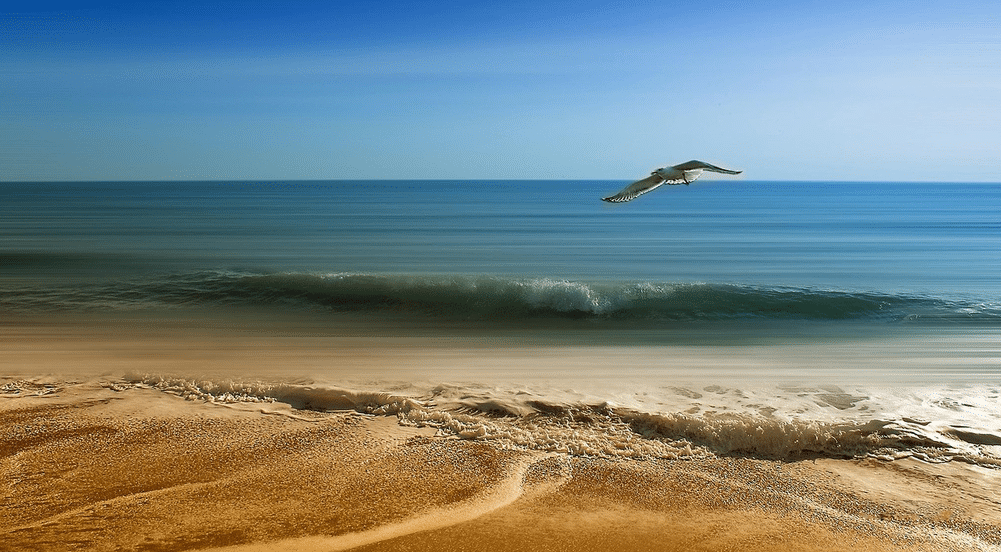
Rip currents are one of the most important Gulf Coast hazards for visitors to understand.
A rip current is a powerful, narrow channel of water moving away from shore.
Rip currents can form near breaks in sandbars and around coastal structures such as piers and jetties.
And here’s something that surprises many visitors: rip currents can occur even when the weather is sunny and the Gulf looks relatively calm.
According to NOAA, some rip currents have been measured moving faster than an Olympic swimmer can sprint.
They don’t typically pull swimmers underwater. Instead, they carry swimmers away from shore, creating dangerous situations when people become exhausted trying to fight the current.
That’s why understanding how to recognize and respond to a rip current is so important.
How to Spot a Rip Current
Rip currents aren’t always easy to recognize, but there are a few warning signs to watch for before entering the Gulf.
Look for:
- A narrow gap in breaking waves where the water appears unusually calm.
- Discolored or murky water moving away from shore.
- Foam, seaweed, or debris moving steadily offshore.
- An area of churning or rippling water that looks different from the surrounding surf.
Sometimes, a rip current can be easier to identify from an elevated beach access walkway.
However, not all rip currents are visible from shore.
Never rely on appearance alone to determine whether the Gulf is safe for swimming. Always check beach warning flags and ask a lifeguard when available.
How to Escape a Rip Current
If you ever get caught in a rip current, the most important thing to remember is don’t panic and don’t fight the current.
Trying to swim directly against it toward shore can quickly exhaust even a strong swimmer.
Instead:
- Stay calm and focus on keeping your head above water.
- Float or tread water to conserve energy.
- If you’re able, swim parallel to the shoreline to move out of the current.
- Once you’re free of the current’s pull, swim at an angle back toward shore, using the waves when appropriate.
- If you’re unable to escape or become tired, continue floating and wave and shout for help.
If you see someone struggling in a rip current, alert a lifeguard immediately or call 911. If possible, throw them something that floats rather than entering dangerous water yourself.
Knowing these steps before your beach vacation could help save a life.