
Yes, you can fly a drone on most Destin beaches, but with certain limits.
Destin sits near Eglin Air Force Base and busy flight paths, so much of the area is controlled or restricted airspace. You will need to register a drone over 250 grams, pass the free TRUST test if you are flying for fun, respect Florida’s privacy law, and stay clear of nesting sea turtles and shorebirds. Check the airspace before every flight.
Capturing Destin from above is hard to beat: turquoise water fading into deeper blue, sugar-white sand stretching for miles, and boats bobbing along the coastline. Plenty of visitors want to bring a drone along for the trip.
Destin’s sugar-white beaches and emerald-green waters make it one of the most beautiful places in Florida for aerial photography. But before you launch your drone, it’s important to understand the rules. Because Destin sits near military airspace, local airports, protected wildlife habitats, and busy beaches, flying here requires a little more planning than many visitors expect.
Can You Fly a Drone on Destin Beaches?
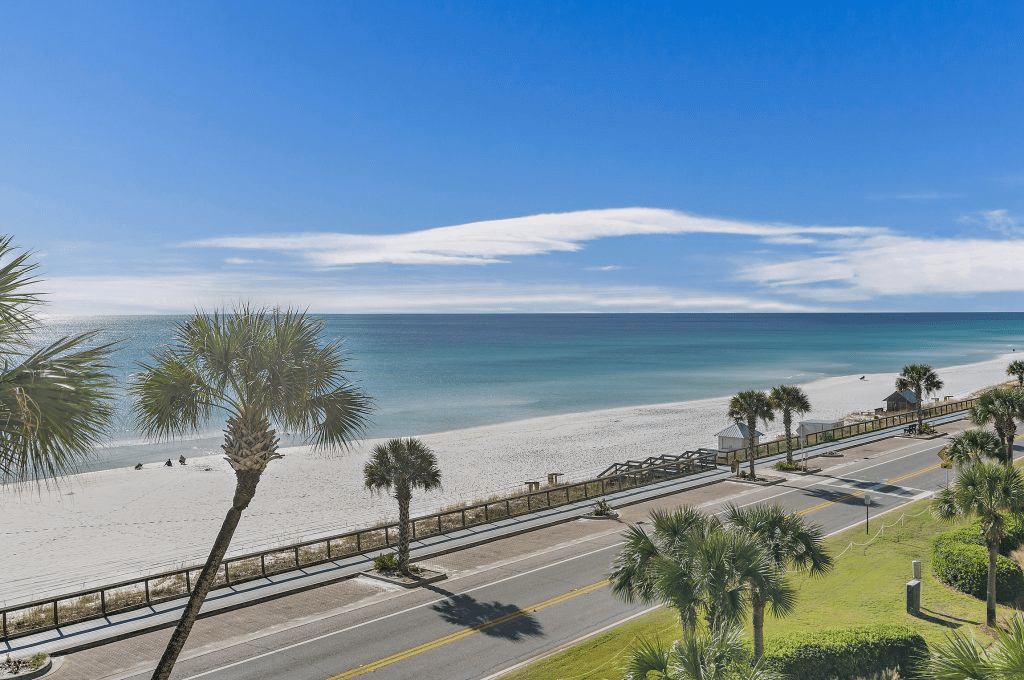
Destin sits close to Eglin Air Force Base, a busy local airport, and several helicopter tour routes, which makes airspace here more complicated than your average beach town.
The city also encourages a Leave No Trace approach on its beaches, and local ordinances can add extra layers on top of federal rules.
So before you launch, you will want to understand FAA regulations, Florida privacy laws, and Destin-specific restrictions. We walk you through each one so you can fly with confidence.
FAA Rules for Flying a Drone in Destin
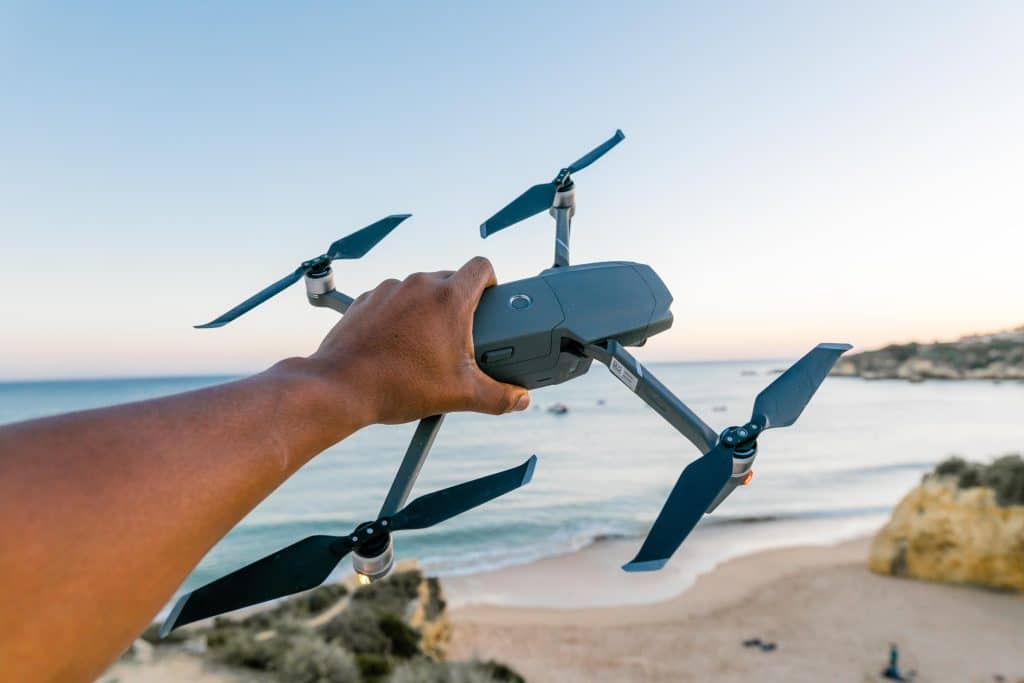
Every drone flight in the U.S. falls under FAA oversight, and Destin is no exception.
There are two sets of rules for small drones: one for recreational flyers and one for commercial operators. Knowing which one applies to you is the first step before you ever take off.
Recreational vs. Commercial: Which Rules Apply to You
| Recreational flyer | Part 107 (commercial) | |
| Who it covers | Flying purely for fun | Any drone work for a business, listing, or pay |
| Required test | TRUST (free, online) | FAA Unmanned Aircraft General Knowledge test |
| Certificate | None | Remote Pilot Certificate |
| Minimum age | None | 16 |
| Registration | $5 covers all your drones, valid 3 years | $5 per drone, valid 3 years |
Drone Registration and Remote ID Requirements
If your drone weighs 250 grams (0.55 lbs) or more, you are required to register it with the FAA, no matter which category you fall under.
Registration is quick and inexpensive. For recreational flyers, a single $5 registration covers every drone you own and stays valid for three years. For commercial or Part 107 flyers, it is $5 per drone, also valid for three years. Once registered, you will need to mark your drone with its registration number and carry proof whenever you fly.
Since Remote ID enforcement began in March 2024, registered drones must also broadcast Remote ID information, a digital license plate that lets authorities identify your drone in the air.
The TRUST Test for Recreational Flyers
If you are flying purely for fun, federal law requires you to pass The Recreational UAS Safety Test, known as TRUST, and carry proof of completion while flying.
TRUST is free, quick, and available entirely online, so you can knock it out before your trip and keep proof saved on your phone.
Part 107 for Commercial and Real Estate Drone Work
Planning to use drone footage for a rental listing, a business page, or paid content?
That likely puts you under Part 107, the FAA rule that governs flying drones for work or business. This path is more involved: you will need to pass the FAA’s Unmanned Aircraft General Knowledge test, be at least 16 years old, and register your drone before operating commercially.
So if you are a property manager or content creator capturing aerial shots of a rental, this is the category you fall under, not the recreational one.
How High Can You Fly a Drone Over the Beach?
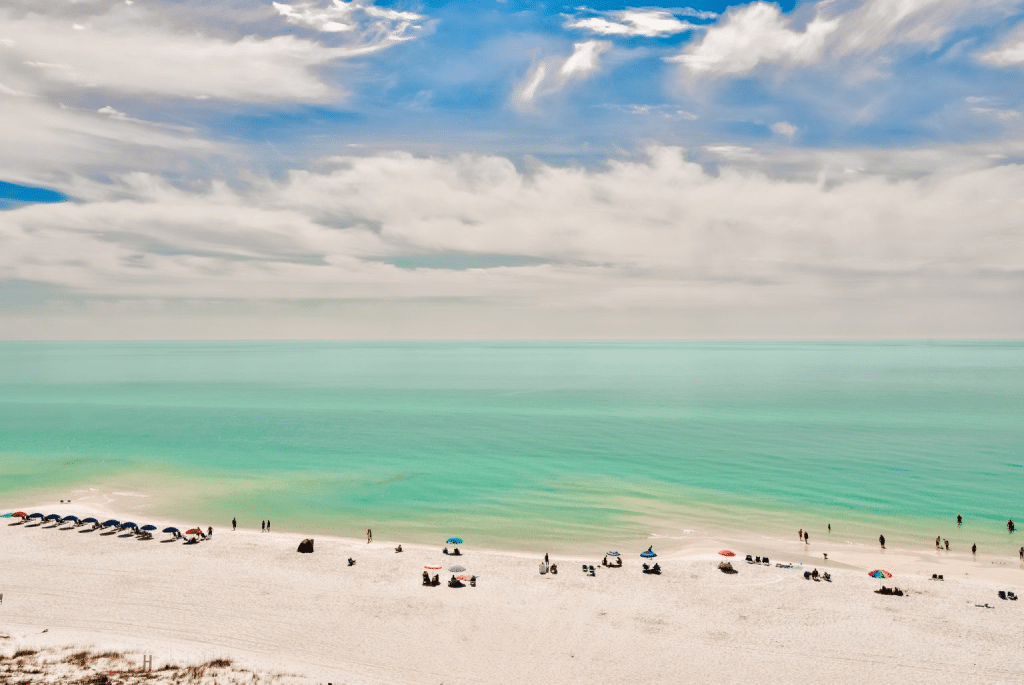
Altitude limits depend on the airspace you are in.
In uncontrolled Class G airspace, recreational flyers must stay at or below 400 feet. Flying in controlled airspace requires prior FAA authorization through LAANC or DroneZone before you go any higher.
Because Destin sits near Eglin Air Force Base and a local airport, much of the area falls under controlled or restricted airspace, which we break down further below.
Can You Fly a Drone at Night in Destin?
Yes, both recreational and Part 107 flyers can fly after dark, but your drone needs anti-collision lighting visible for at least three statute miles. Night is also when golden-hour color is gone, so most pilots here treat dawn and dusk as the sweet spot instead.
Florida State Drone Laws and Privacy Rules
Federal rules cover the sky, but Florida law covers what you do once you’re up there.
The state’s Freedom from Unwarranted Surveillance Act, Florida Statute § 934.50, has been on the books since 2015 and is one of the stricter drone-privacy laws in the country.
Here’s what it means for you as a visitor with a camera drone:
- You can’t use a drone to record someone on private property with the intent to invade their privacy, without their consent.
- This applies to homeowners, tenants, guests, and anyone lawfully present on the property, not just the owner.
- Florida presumes a reasonable expectation of privacy if the person isn’t visible from ground level, even if your drone can see them from above.
- Violating the law is a first-degree misdemeanor, and sharing footage captured illegally can escalate to a felony.
In practice, this means you should avoid hovering above private balconies, backyards, or pools, even if you’re just trying to get a nice shot of the coastline.
Rather, stick to public beach areas, open water, and shots where no one could reasonably expect privacy, and you’ll stay well within the law.
Drones and Destin Wildlife: Sea Turtles and Nesting Birds
This is the rule most visitors miss, and it has nothing to do with airspace. Destin’s beaches are active sea turtle nesting grounds from roughly May through October, and they host protected shorebird colonies year-round.
Flying too low over a nesting turtle or flushing a bird off its nest can be prosecuted under the federal Endangered Species Act, the Migratory Bird Treaty Act, and Florida’s Marine Turtle Protection Act. These protections apply even when the airspace itself is perfectly legal to fly in, so you can do everything else right and still break the law here.
A few simple habits keep you clear:
- Keep at least 500 feet from any marked sea turtle nest, the distance Florida wildlife officials recommend.
- Never chase, hover over, or dive toward wildlife on the sand or in the water.
- Back off immediately if birds take flight or show any sign of distress. That reaction is exactly what the law is written to prevent.
- Watch for posted nesting markers and roped-off dune areas, especially in summer.
Protected species along these beaches include the snowy plover, least tern, Wilson’s plover, and American oystercatcher, so give any group of birds a wide berth.
Do You Need a License or Permit to Fly a Drone in Destin?
It depends on why you’re flying. If you’re a hobbyist filming your family’s beach trip for fun,